
Manuka Honey for Dental & Gum Health | Natural Decay Protection

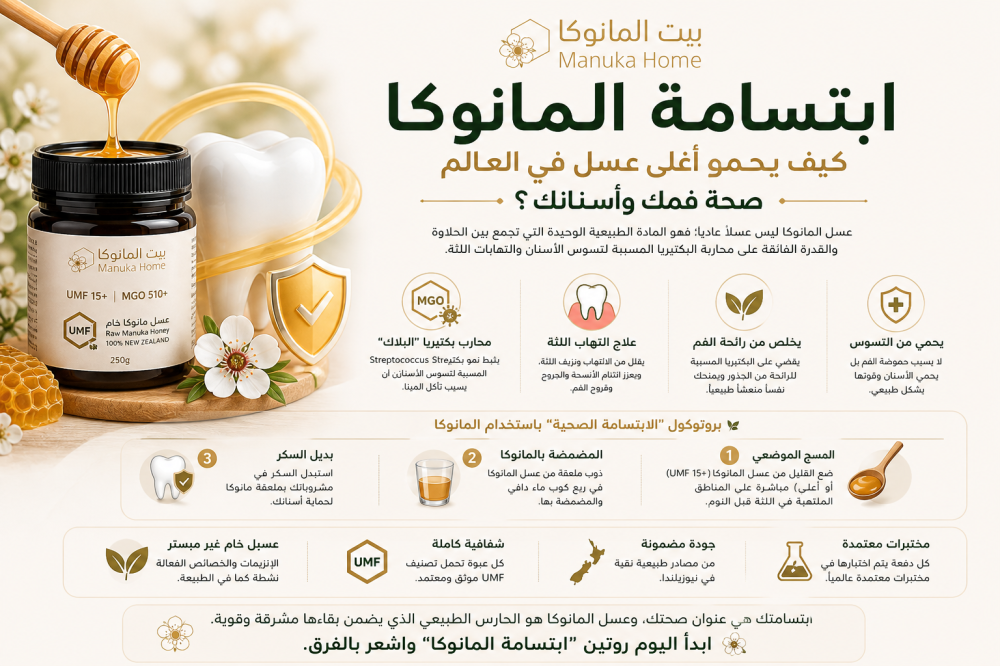
The Manuka Smile: How the World’s Finest Honey Protects Your Mouth and Teeth

At first glance, it might seem strange to suggest consuming "honey" to maintain dental health. We have always been taught that sugars are the primary enemy of a beautiful smile. However, Manuka honey is no ordinary honey; it is the only natural substance that combines sweetness with a superior ability to fight the bacteria responsible for tooth decay and gum disease.

In this article, we reveal the scientific research that has led dentists to view Manuka honey as a "natural mouthwash" and a protective shield for oral health.

1. The Warrior Against Plaque

Plaque is the sticky film of bacteria that accumulates on teeth and leads to decay. A study published in the Journal of the International Academy of Periodontology showed that chewing or applying Manuka honey to the gums significantly reduces plaque accumulation and gum bleeding.

How does it work? Thanks to the Methylglyoxal (MGO) compound, Manuka inhibits the growth of Streptococcus mutans, the bacteria responsible for tooth decay, without causing erosion of the tooth enamel.

2. Treating Receding Gums and Gingivitis

Many people suffer from bleeding gums when brushing, which is an early indicator of inflammation. The anti-inflammatory properties of Manuka honey work to:

Soothe Tissues: Reducing swelling and redness in the gums.

Rapid Healing: Manuka aids in the healing of mouth ulcers (Aphthous ulcers) and wounds caused by dentures or orthodontic braces.

3. Eliminating Bad Breath

Bad breath is often caused by bacterial activity at the back of the tongue or between the teeth. Manuka honey doesn't just mask the odor; it eliminates the root cause, providing you with naturally fresh breath.


4. ManukaHome Innovation: Oral Care on the Go

To achieve the maximum benefit for oral health, manukahome.com has developed solutions that make caring for your smile easy and enjoyable:

Manuka Spoons with Lemon & Ginger: Lemon acts as a natural disinfectant, and ginger stimulates blood circulation in the gums. Together with Manuka, you get an instant "oral sterilization session" anytime.

Manuka Spoons with Royal Jelly: Ideal for enhancing the healing of delicate oral tissues and providing the necessary vitamins for gum strength.

5. The "Healthy Smile" Protocol Using Manuka

How can you use Manuka as part of your daily dental routine?

1. Topical Application: You can apply a small amount of Manuka honey (with a rating of UMF 15+ or higher) directly to inflamed areas of the gums before bed.

2. Manuka Rinse: Dissolve a spoonful of Manuka honey in a quarter cup of lukewarm water and use it as a rinse to ensure the active ingredients reach all corners of the mouth.

3. Sugar Substitute: Replace sugar in your drinks with a spoonful of Manuka to protect your teeth from the destructive effects of white sugar.

6. Why Do Customers Trust "ManukaHome"?

Achieving therapeutic results for the mouth requires honey with high, documented antibacterial activity. We provide you with:

Full Transparency: Every jar carries a UMF rating that guarantees the presence of active substances that fight oral bacteria.

Raw Honey: Our honey is unpasteurized, meaning the enzymes that kill decay-causing bacteria remain live and active.

7. Frequently Asked Questions (FAQ)

Q: Does Manuka cause decay because it is sweet?

A: No. Studies have proven that Manuka honey does not cause the oral acidity that leads to tooth erosion. On the contrary, its antibacterial properties protect them.

Q: Can it be used for children with gingivitis?

A: Yes. For children over one year old, Manuka is considered the best natural alternative to chemical disinfectants that may be too harsh for a child's mouth.

Summary: Your smile is the mirror of your health, and Manuka honey is the natural guardian that ensures it remains bright and strong. Start your "Manuka Smile" routine today and feel the difference.


Manuka Honey for Dental & Gum Health | Natural Decay Protection

Related Articles

Why Does the Texture of Manuka Honey Change Over Time?
21 May 2026
أسماء

Why Does the Texture of Manuka Honey Change Over Time?

Why Does the Texture of Manuka Honey Change Over Time?

Some people notice that the texture of Manuka honey can change over time.

Sometimes it feels smooth and creamy, while at other times it becomes thicker or develops light crystallization. 🍯

This often leads to questions such as:

Does a change in texture mean the honey quality has decreased? Should authentic honey always look exactly the same?

In reality, texture changes are very common in natural honey and can even be a sign that the product has not been heavily industrially processed.


Manuka Honey Is a Natural Living Product

Unlike manufactured products with artificially stabilized textures, Manuka honey remains a natural product that reacts to its environment.

Its texture can be influenced by:

  • Temperature.
  • Storage conditions.
  • Length of storage.
  • The natural sugar composition within the honey.

These variations are normal in most high-quality raw honeys.


Why Does Honey Become Thicker Sometimes?

When temperatures drop, natural honey tends to become denser.

In some cases, it may:

  • Develop a creamier texture.
  • Form light natural crystals.
  • Become less fluid than usual.

This does not mean the honey is spoiled or lower in quality.


Natural Crystallization Is Completely Normal

Crystallization occurs when some of the natural sugars in honey begin to bind together over time.

The speed of crystallization depends on:

  • The type of honey.
  • Natural glucose levels.
  • Storage conditions.
  • Surrounding temperature.

Some Manuka honey varieties crystallize faster than others, especially when stored in cooler environments.


Can the Smooth Texture Be Restored?

If the honey becomes thicker than desired, the jar can simply be:

  • Placed in slightly warm water.
  • Without exposing it to direct high heat.

Excessive heat may affect the honey’s natural quality and flavor, so gentle warming is always recommended if needed.


UMF and MGO Levels Also Affect Texture

Different concentration grades may influence the consistency of Manuka honey.

Generally:

  • Higher grades tend to be denser.
  • Some varieties are naturally creamier.
  • Lower grades may appear smoother and more fluid.

This is a natural part of the variation between different harvest batches.


Proper Storage Helps Maintain Texture

To preserve the best possible texture and flavor:

  • Store the honey in a cool, dry place.
  • Keep it away from direct sunlight and heat.
  • Close the lid tightly after each use.

Good storage practices help maintain both texture and overall quality for longer periods.


Conclusion

Changes in the texture of Manuka honey over time are usually not a cause for concern.

In fact, thicker consistency or light crystallization can often indicate that the honey has remained natural and minimally processed.

That’s why texture variation is considered part of the authentic experience of genuine Manuka honey.


Read More
Why Does Manuka Honey Taste Different From One Jar to Another?
19 May 2026
أسماء

Why Does Manuka Honey Taste Different From One Jar to Another?

Why Does Manuka Honey Taste Different From One Jar to Another?

Many people expect Manuka honey to taste exactly the same every time they buy it, but slight differences in flavor, texture, or aroma are actually completely natural in authentic honey. 🍯

Unlike industrial food products made with fixed formulas, Manuka honey is a natural product influenced by flowers, climate, harvesting conditions, and regional environments.

That natural variation is part of what makes it unique and valuable.

In this article, we’ll explore why the taste of Manuka honey may differ from one jar to another — and why this difference is usually a sign of authenticity rather than a problem.


The Flowers Naturally Affect the Flavor

Manuka honey is produced primarily from the nectar of the Manuka tree flowers in New Zealand.

However:

  • Flower density changes from season to season.
  • Some regions are cooler or more humid than others.
  • Soil and weather conditions influence the nectar itself.

As a result, you may notice:

  • One jar with a deeper, stronger flavor.
  • Another with a lighter and smoother taste.

This is completely normal in high-quality natural honey.


Harvest Seasons Create Natural Variations

Just like specialty coffee or premium olive oil, honey characteristics can vary depending on the harvest season.

Some seasons may produce:

  • A more herbal or botanical flavor.
  • A thicker texture.
  • Slightly darker or lighter color tones.

These variations reflect the nature of the season itself, not a defect in the product.


Concentration Levels Influence the Taste

Higher UMF or MGO ratings often result in:

  • A richer and more intense flavor.
  • Less traditional sweetness.
  • A stronger botanical profile.

This is why some people notice major differences between jars, when in reality the concentration grade is simply different.


Storage Conditions Affect Flavor and Texture

The way Manuka honey is stored plays a major role in preserving its quality.

Long exposure to heat or direct sunlight may affect:

  • Texture.
  • Aroma.
  • Overall taste experience.

For best results, Manuka honey should be stored in a cool, dry place away from direct heat.


Natural Crystallization Is Not a Sign of Spoilage

Sometimes honey becomes thicker or develops light crystals over time.

This is very common in authentic, minimally processed honey.

In fact, many premium natural honeys naturally crystallize as part of their raw composition.


Why Some People Appreciate These Differences

Fans of premium natural products often see this variation as part of the experience itself.

Just as:

  • Specialty coffee tastes different from one farm to another.
  • Grapes vary from season to season.

Manuka honey also carries the natural signature of each harvest batch.


Conclusion

Differences in the taste of Manuka honey from one jar to another are usually not a concern — they are often a sign that the honey is genuinely natural and not industrially standardized.

Factors such as harvest season, floral source, concentration level, and storage conditions all contribute to the final flavor experience.

That’s why every jar of authentic Manuka honey can have its own unique character and distinctive taste.


Read More
7 Common Manuka Honey Mistakes That Reduce Its Quality
18 May 2026
أسماء

7 Common Manuka Honey Mistakes That Reduce Its Quality

7 Common Mistakes That Reduce the Quality of Manuka Honey

Many people buy Manuka honey for its premium quality and unique experience, but what many don’t realize is that the way it is used and stored can greatly affect its quality over time.

In many cases, the issue is not the honey itself — but rather the daily habits that reduce its value without us noticing.

In this article, we’ll explore the most common mistakes people make when using Manuka honey and how to avoid them to preserve its taste, texture, and quality for as long as possible.


1. Adding Manuka Honey to Extremely Hot Drinks

One of the most common mistakes is adding Manuka honey directly into boiling water or very hot tea.

High heat may affect some of the delicate natural compounds found in the honey and can also alter its unique flavor.

Instead, it’s better to:

  • Add the honey after the drink has cooled slightly.
  • Or enjoy it directly by the spoonful to experience its natural taste.


2. Storing It Near Heat or Direct Sunlight

Manuka honey is a natural product that can be sensitive to excessive heat and prolonged exposure to sunlight.

For best storage:

  • Keep the jar in a cool, dry place.
  • Close the lid tightly after each use.
  • Avoid leaving it inside a car or near ovens and stoves.

Proper storage helps preserve the honey’s texture, flavor, and quality for longer.


3. Using a Wet Spoon Inside the Jar

It may seem like a small detail, but it can affect the honey over time.

Introducing moisture into the jar may change the texture and consistency of the honey, so it’s always recommended to use:

  • A clean, dry spoon.
  • Or a dedicated wooden honey spoon.


4. Assuming More Honey Means Better Results

Some people believe that consuming larger amounts of Manuka honey provides greater benefits, but consistency and quality matter more than quantity.

In most cases:

  • One or two teaspoons daily are enough.
  • Regular moderate use is better than excessive occasional use.


5. Ignoring UMF or MGO Ratings

Not all Manuka honey products have the same concentration or quality.

That’s why jars often display ratings such as:

  • UMF
  • MGO

These ratings help identify the strength and quality level of the honey.

Choosing the right grade depends on your personal preference and intended use.


6. Treating It as a Complete Replacement for a Healthy Lifestyle

Manuka honey is a premium natural product, but it is not a magical solution on its own.

It works best when included as part of:

  • A balanced diet.
  • Good sleep habits.
  • Proper hydration.
  • Reduced intake of processed sugars.


7. Buying From Unreliable Sources

The growing popularity of Manuka honey has led to a wide range of products with varying quality levels.

Before purchasing, make sure to check:

  • Clear product grading.
  • The honey’s origin.
  • Store credibility.
  • Certifications or authenticity labels.

Authentic Manuka honey is usually recognized by its rich taste, creamy texture, and distinctive botanical aroma.


Conclusion

Manuka honey is more than just a natural sweetener — it’s a premium experience that depends on both quality and proper usage.

Avoiding these simple mistakes can help you fully enjoy its natural taste and preserve its quality over time.

Ultimately, the best way to enjoy Manuka honey is to treat it as a premium natural product that deserves proper care in both storage and daily use.


Read More