
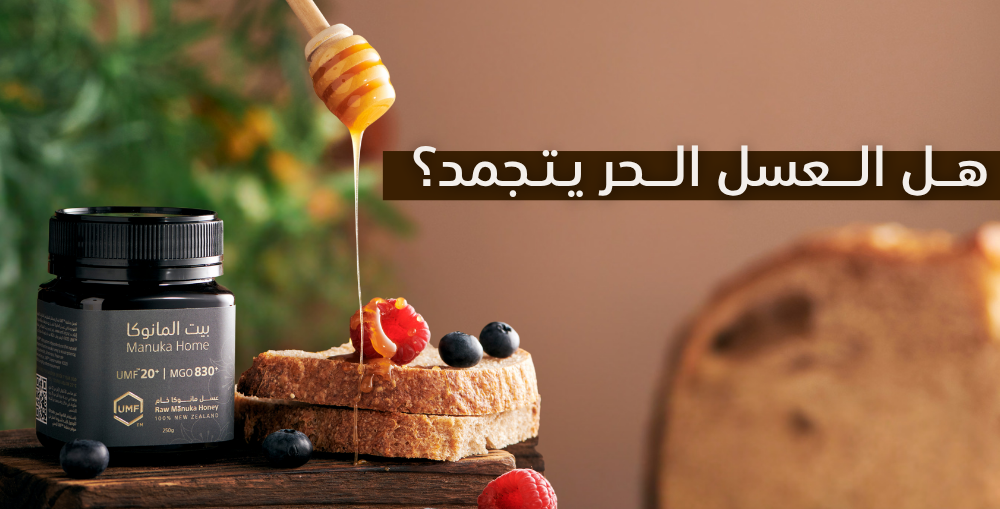
Are you looking for a honey that's not only natural, but also incredibly beneficial? Manuka honey is nature's rare treasure and your secret weapon for health and immunity.
But did you know? Many people wonder: Does raw honey solidify? The simple answer is: Yes, raw honey can crystallize and take on a thicker consistency, especially at low temperatures. This is a sign of its purity and high quality, not evidence of adulteration, as some believe.
Don't miss the opportunity to experience honey that combines luxurious taste with proven health benefits. Choose authentic Manuka honey and enjoy natural strength like never before.
Does raw honey freeze?
Yes, absolutely. The answer to the question, "Does raw honey crystallize?" is that honey crystallization does not mean it's adulterated. Rather, it's a natural phenomenon that confirms its purity, and is affected by several key factors:
- Type of nectar source: Honey produced from certain flowers, such as tamarisk or sidr, crystallizes faster than sidr or talh honey.
- Moisture content: The lower the moisture content, the greater the chance of crystallization due to the concentration of sugars.
- Temperature: Low temperatures (below 14°C) stimulate crystallization, especially during transportation or storage in cold areas.
- Presence of primary crystals: The presence of fine particles such as pollen or wax accelerates crystallization, acting as nuclei to start the process.
- Glucose to fructose ratio: The higher the glucose content, the faster crystallization occurs. Therefore, we notice that clover honey crystallizes faster than Sidr honey, which is rich in fructose.
What is honey crystallization?
After we've answered the question, "Does raw honey freeze ?", natural honey isn't just a sweet liquid; it's a concentrated sugar solution formed as a result of a complex interaction between flower nectar and the bee's saliva inside its stomach. This solution contains varying proportions of:
- glucose
- fructose
- sucrose
- low humidity
When environmental conditions change, especially when temperatures drop, glucose—one of the less soluble sugars—gradually begins to crystallize, transforming the consistency of honey from a smooth liquid to a thicker, more solid texture. This phenomenon is known as “honey crystallization,” and is often mistaken for “freezing.”
It is important to realize that this change does not mean that the honey has spoiled or been adulterated, but rather is a natural indication of its quality and purity.
Does crystallization affect the quality of honey?
Does real honey freeze ? The definitive answer: Natural honey does not freeze; it crystallizes. This phenomenon is common and natural, and does not affect the quality or benefits of the honey at all. It retains its full mineral, vitamin, active enzyme, and antioxidant content.
The only difference is the texture; it changes from a smooth liquid to a thicker, more viscous consistency, requiring a spoon to scoop it out rather than pouring it.
If you prefer it liquid, follow these steps carefully:
1. Place the honey container in a warm water bath, with the water temperature not exceeding 40°C.
2. Leave it for a few minutes, and gently stir in the honey if necessary.
3. Continue moderate heating until it returns to its original state.
4. Avoid exposing honey to high heat or placing it in the microwave, as excessive heat may cause it to lose its vital elements and destroy its natural properties.
What are the types of honey crystallization?
After shedding light on the answer to the question, "Does fresh honey freeze?", honey's crystallization characteristics vary depending on its type. Some types crystallize uniformly, while others appear uneven, with the crystals settling at the bottom and the liquid remaining on top.
Crystallized honey typically has a light, off-white color, due to the purity of natural glucose, while darker honey retains its brown hue even after crystallization.
Manuka honey, available on the Manuka House website in Saudi Arabia, boasts unique properties and an exceptional composition. It exhibits crystallization, demonstrating its authenticity without compromising its effectiveness, making it an ideal choice for those seeking pure quality and maximum benefits.
What are the types of crystallized honey?
After answering the question, "Does real honey crystallize?", we explained that the higher the glucose content, the more likely honey is to crystallize, while fructose resists this process due to its high solubility in water. Here are some types known for their rapid crystallization:
Ginger honey:
Thanks to its high glucose content, it is one of the most granular types and crystallizes remarkably quickly under the right conditions.
On wildflowers (such as clover):
Due to its high glucose content, this type tends to crystallize easily, exhibiting a homogeneous granular texture when it does.
Sidr honey:
It has a higher glucose content than fructose, which makes it more susceptible to crystallization within a short period, especially when stored at low temperatures.
It's worth noting that the answer to the question, "Does raw honey freeze?" is yes. The crystallization of these types does not diminish their quality or nutritional value, but rather reflects their purity and lack of industrial processing, especially when discussing raw or organic types.
What are the uses of crystallized honey?
Now that we've answered the question, "Does raw honey freeze?" It's important to note that crystallized honey isn't a negative or a sign of spoilage. Rather, it's a true indication of its purity and raw nature, as it hasn't been subjected to processing or heating that would degrade its nutritional properties. On the contrary, its crystallization adds a variety of practical uses without losing any of its value or benefits, such as:
In daily foods:
Crystallized honey can be used as a healthy and delicious alternative to jam, spread on toast, bread, or croissants to give it a rich taste and distinctive texture.
In sweetening drinks:
Despite its crystallization, it dissolves easily in hot beverages such as tea, coffee, or herbal tea, making it a natural choice for a healthy sweetener without any artificial additives.
In recipes and baked goods:
It is used in preparing sweets and pastries, and can even be used in pickle recipes or food seasonings, as it adds a deep flavor and perfect texture.
As a direct dessert:
It can be eaten as is, with a spoon, or with milk and fruits, benefiting from its creamy texture and intense flavor.
For those interested in premium honey, the crystallization of Manuka honey confirms its authenticity and high quality, without compromising its rare therapeutic properties. This makes it ideal for daily use and a balanced diet. Order the best value-for-money honey packages now and enjoy its unique therapeutic properties.
What are the health benefits of honey?
Now that we've learned the detailed answer to the question, "Does raw honey freeze?" , here are the most important benefits of pure honey for general health, which include stimulating the immune system and enhancing the efficiency of defense cells, reducing the risk of bacterial or viral infections and protecting the body from seasonal diseases. It is characterized by the following:
Effective respiratory support:
Honey is an effective natural option for colds, coughs, and sore throats, as it acts as an antibacterial against bacteria that cause upper respiratory tract infections and reduces the severity of symptoms.
Accelerate wound healing:
Thanks to its high glucose and fructose content, honey helps absorb fluids from the injury site, creating a dry environment that stimulates tissue healing and regeneration.
Natural antibacterial:
Honey has powerful antiseptic properties that reduce the likelihood of wound infection and help prevent the spread of bacteria and germs on the skin's surface.
With New Zealand Manuka honey , the benefits go beyond expectations. Thanks to its high concentration of the active compound MGO, it's the perfect choice for boosting immunity, accelerating wound healing, and fighting infections with amazing natural efficiency.
Make Manuka honey part of your daily health routine and protect yourself and your loved ones from the first signs of illness in a natural and safe way. Order it now and start your immune balance journey directly from nature.
What causes natural honey to crystallize?
Does raw honey solidify ? This is a common question. One of the signs of pure honey is its crystallization, which also indicates its quality and purity. It's a natural process resulting from the interaction of the components of raw honey without any artificial intervention.
Under certain conditions, glucose molecules aggregate to form fine crystals, while fructose remains dissolved, giving honey a granular or semi-solid texture without affecting its taste or nutritional properties. Among the most important reasons that lead to the crystallization of natural honey are:
Purity of honey and the presence of natural stimulants:
The presence of natural elements such as pollen, beeswax, fine dust, and air bubbles acts as a nucleus that stimulates crystal formation.
Chemical composition of honey:
Crystallization behavior varies from one type to another depending on the honey composition and the glucose to fructose ratio. The higher the glucose ratio, the faster and more pronounced the crystallization.
General quality of honey:
Microelements in honey such as minerals, amino acids, and enzymes directly affect the rate of crystallization and its final texture.
Storage conditions:
Humidity, packaging type, and storage time all affect how quickly and quickly honey crystallizes, especially if it is not stored in airtight containers away from direct light.
temperature:
Lowering the temperature to below 22°C accelerates the crystallization process, especially when stored in cold or temperate areas.
It is worth noting that the crystallization of honey, especially in luxury types such as the multi-benefit Manuka honey, does not affect its quality or therapeutic properties at all. It often reflects the preservation of its raw nature and the absence of heat treatment, which may cause it to lose some of its active enzymes and vital benefits. Order it now.
How to know original honey
A common question about the authenticity and naturalness of honey is: How can you be sure it's pure honey? Does pure honey solidify? The simple answer is that distinguishing pure honey isn't limited to crystallization alone. There are a number of physical and sensory characteristics that enhance the credibility of its source and quality. Here's a detailed answer to the signs of pure honey when purchasing it.
Homogeneous creamy texture:
When honey is stored for a period of time at low temperatures (such as in the refrigerator), it turns into a smooth, buttery or creamy consistency, a characteristic of raw, unprocessed honey.
Not completely frozen:
Natural honey does not completely solidify even in cold weather and retains its elasticity, unlike adulterated honey which may turn into a solid mass when the temperature drops.
Partial freezing at the bottom:
The appearance of slight crystallization or congealing at the bottom of the container (similar to the congealing of olive oil) is an indicator of authenticity.
Natural color:
Real honey tends to have warm, honey-like colors ranging from amber to dark gold, while imitation honey appears duller and unnatural.
Absence of pungent odor:
Raw honey typically doesn't have a strong odor; any artificial or strange odor may indicate the addition of flavorings or outside ingredients.
Fine crystals and visible pollen grains:
The presence of fine crystals or pollen deposits is a clear indication that the honey has not been strained or overheated.
Balanced texture:
Does raw honey freeze? Raw honey has a moderate viscosity and is smooth when stirred or poured, without being unnaturally heavy.
Distinctive and rich taste:
How do I know if honey is authentic? Authentic honey often has a tangy or slightly sweet flavor, which varies depending on the flower source, giving it a unique, inimitable character.
Natural turbidity:
Does raw honey solidify ? Raw honey may appear opaque or have fine crystalline clumps, a sign that it has retained its natural components without excessive filtering.
consistency:
When poured onto a smooth surface, real honey maintains its consistency without separating into layers, unlike adulterated types that may exhibit a separation in the structure.
When you choose a natural honey like Original Manuka Honey, the best honey in the world , you are not only getting an exceptional flavor, but a raw and pure product, preserved with its unique biological properties that are difficult to match.
Home methods you can use to test the quality of honey
In addition to clarifying the answer to the question, "Does raw honey freeze?" Please note that choosing pure honey is not a luxury, but rather an essential step to maintaining your health and maximizing its therapeutic and nutritional benefits. Here are a set of quick home tests to reveal the purity of honey and distinguish real from adulterated:
absorbent paper test
Place a small drop of honey on a tissue or absorbent paper. If the paper absorbs the honey quickly or a wet spot appears, this indicates high moisture content and the honey may be adulterated or unripe. Pure honey will remain solid without leaking, reflecting its natural density and quality. However, this is not conclusive evidence of adulteration, but rather a preliminary indicator. This may indicate high moisture content or that the honey is unripe, but this test alone cannot be relied upon as conclusive evidence of adulteration.
Natural Flavor Test
Taste a little honey slowly. The authentic taste of natural honey is rich, balanced, and may have a floral or vegetal note depending on its source. A bitter or sour taste may indicate that the honey has spoiled or been mixed with unnatural substances.
Honey test by fire
We also answered the question: "Does raw honey solidify?" You should also know: "Does raw honey burn when exposed to fire?" Popular belief holds that raw honey does not contain added water, so it may exhibit certain behaviors when exposed to fire, such as not bubbling. However, scientifically, this test is not considered accurate or reliable for determining honey purity.
sugar test
It is commonly believed that adding sugar may make a difference in the reaction of adulterated honey, but this method is not considered scientific or reliable, and laboratory testing remains the most accurate method for determining purity.
Pure honey not only offers an exceptional taste, but is also a rich natural source of vitamins, antioxidants, and vital enzymes that boost immunity and support overall health.
Because you deserve the best, always choose a trusted honey like UMF 15+ Manuka Honey , which combines laboratory-tested purity with world-renowned medicinal potency.
What is the difference between natural honey and processed honey?
One of the questions that many people have is: What is the difference between pure honey and adulterated honey? Here's the detailed answer below:
Raw natural honey:
It is honey extracted directly from beehives without being subjected to any heat treatment or artificial additives.
It maintains its original formula, rich in vital enzymes, and contains effective natural ingredients such as pollen, beeswax, and royal jelly, making it the most beneficial choice from a nutritional and therapeutic standpoint. It contains effective natural ingredients such as pollen and beeswax, and may sometimes contain traces of royal jelly if it is not fully filtered.
Pasteurized or processed honey:
It undergoes heating and filtration processes aimed at extending its shelf life and improving its commercial appearance. Although it retains some of its nutritional value, these treatments may strip it of some of the enzymes and trace elements that distinguish raw honey, rendering it less effective in terms of health benefits.
The choice of honey depends on its intended use. Raw honey is suitable for those looking for a natural product rich in vital elements, while processed honey is preferred for culinary purposes or long-term use.
How long does crystallized honey last?
Crystallized honey does not spoil easily and can retain its shelf life for many years if stored properly. Natural crystallized honey has a natural ability to resist spoilage, thanks to its antibacterial and anti-humidity properties.
For proper storage, store honey in an airtight container in a cool, dark place away from sunlight and heat to preserve its taste and nutritional value.
If the taste and smell remain normal without any noticeable change, the honey is still perfectly safe to consume. However, if a strange smell or unusual taste appears, it is best not to use it.
Frequently Asked Questions
Why is honey crystallization considered a positive sign?
Crystallization of genuine Manuka honey is an undisputed mark of quality, embodying its raw nature and high purity, indicating that it is free from artificial processing and retains all of its unique therapeutic properties.
Does real honey freeze in winter?
Yes, real honey solidifies in the winter due to temperatures dropping below normal, and it crystallizes according to the aforementioned signs that indicate its authenticity and purity. It cannot be said at all that honey that crystallizes is unnatural.
Is it better to store honey in the refrigerator?
This is not recommended at all. It is better to store it on a shelf at home to prevent it from freezing and turning from a liquid consistency to a more viscous one.
Where is it best to store honey away from ants?
It is best to keep honey in high places to keep it from gathering ants.
How do I know if honey is original or adulterated?
How do you know if honey is real with water? All you have to do is place a teaspoon of honey in a cup of room-temperature water. If it dissolves quickly and spreads immediately without resistance, the honey may be adulterated or have had sugar syrup added to it. However, if it settles to the bottom and requires stirring to dissolve, this is a sign that the honey is natural and has not been enriched with artificial ingredients.
How to test honey at home?
Do the microwave test by placing a small amount of honey in a glass bowl in the microwave for one minute. If it begins to caramelize and thicken or gradually changes color, this is an indication that the honey is raw and authentic.
If foam or sudden effervescence appears, the honey may be impure or contain added ingredients that affect its natural structure.
Does licking a spoon spoil the honey?
Yes, licking a wooden honey spoon and putting it back into the honey without washing it could damage it or cause it to lose some of its nutritional value. This is because honey is a fertile environment for bacteria to grow, and adding the licked spoon back into the honey could lead to the addition of more foreign substances, which could spoil the honey.
Finally, we've provided a detailed answer to the question, "Does raw honey freeze?" and "Does real honey freeze?" We've also covered the difference between natural and adulterated honey, and how to differentiate between them using a variety of home remedies. This way, you can differentiate between the original Manuka honey available on the Manuka House website and any other unnatural or adulterated honey, ensuring you get the most out of your natural honey and its positive impact on overall health, efficiently and effectively.