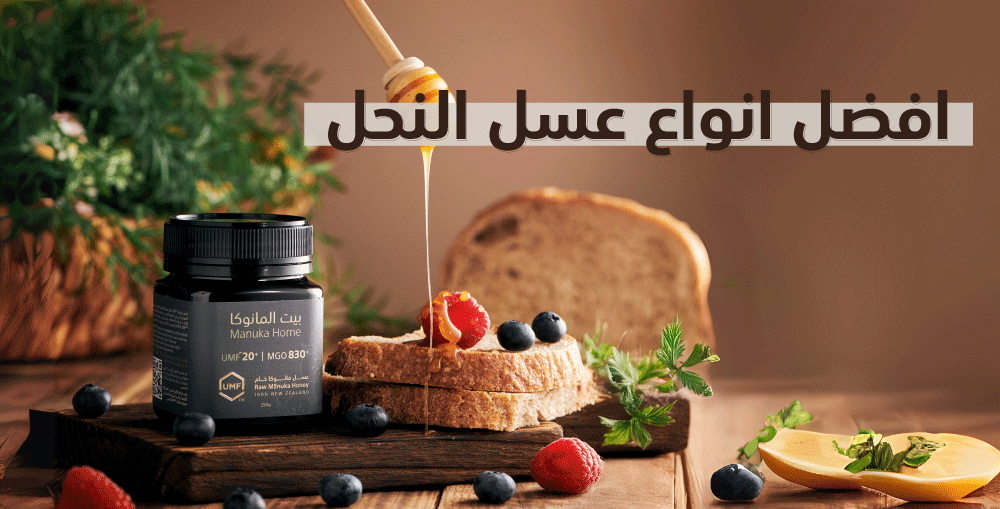
If you're looking for a natural product that combines a luxurious taste with amazing health benefits, Manuka honey, the finest natural honey , is the perfect choice for you. It's considered one of the best types of honey in the world, thanks to its unique properties that set it apart from other honeys.
This rare honey is extracted from the nectar of the New Zealand Manuka tree and is known for its high immune-boosting properties, cleansing the digestive system, aiding wound healing, and fighting infections thanks to its natural MGO compound.
Choose Manuka honey and enjoy the luxurious taste and unparalleled health benefits. It is a smart investment in your health, brought to you by the House of Manuka.
What are the best types of honey in Saudi Arabia?
When it comes to the best types of honey in Saudi Arabia, pure Manuka honey stands out as an exceptional choice thanks to its rare composition and unique therapeutic properties . It boasts a high concentration of antioxidants and active ingredients like MGO, making it one of the most expensive and best natural honeys available. It's also ideal for naturally strengthening immunity , supporting digestive health, and accelerating wound healing.
At the Manuka House store , Manuka honey is available in reliable concentrations that reflect its high purity and compliance with the highest international quality standards.
Other distinctive types of honey:
- Clover honey: Characterized by its light color, mild taste, and pleasant floral aroma, it is an ideal choice for sweetening drinks and foods, and is preferred by children and adults alike.
- Acacia honey: Known for its clear color and mild, aromatic flavor, it dissolves easily and is suitable for daily use, whether consumed directly or added to beverages.
- Citrus honey: Extracted from citrus blossoms such as oranges and lemons, it is distinguished by its golden color and refreshing aroma. Its most important features are that it is low in sugar and rich in health benefits, most notably its immune support, stimulation of blood circulation, and improvement of digestion, in addition to its soothing properties that aid sleep and relaxation.
What are the best types of honey for children?
When choosing the best types of honey for children, it's important to focus on purity and high quality, along with nutritional value. Honey isn't just a natural sweetener; it's a rich source of elements that support children's immunity and nutrition during various stages of development. Some of the most important types of pure honey suitable for children include:
Natural raw honey:
Pure raw honey such as UMF 10+ Manuka honey An ideal choice for children, thanks to its mild taste and easy-to-swallow consistency, this variety contains a complete range of vitamins, minerals, and enzymes that boost children's immunity, contribute to improved digestion, and provide their body with energy in a natural and safe way.
Assorted flower honey:
Its nectar comes from multiple sources, making it rich in antioxidants and micronutrients. Despite its relatively strong flavor, it remains a nutritious option for children and supports their overall health thanks to its balanced natural formula.
Organic honey:
Produced according to strict environmental standards without chemical intervention or the use of pesticides, making it one of the purest and safest types for children. In addition to its high nutritional value, organic honey has antibacterial properties, making it useful in supporting the immune system and dealing with minor infections naturally.
It is recommended not to give honey to children under one year of age, to ensure their safety from the risk of food poisoning.
What are the benefits of original Manuka honey for children?
UMF 20+ Manuka honey is a premium and unique choice when it comes to honey suitable for children, due to its unique natural properties and rich composition of active ingredients. Here are its most prominent health benefits that make it a smart choice in your child's diet:
Boosting your child's immunity naturally:
Thanks to its active MGO compound and powerful antioxidants, Manuka honey helps strengthen children's immune systems, giving them a greater ability to safely and naturally resist viral and bacterial infections.
Supports digestion and regulates bowel movements:
Manuka honey contains active enzymes that help improve digestion and relieve digestive disorders such as constipation and bloating, in addition to its role in balancing beneficial bacteria in the intestines.
Soothes coughs and relieves sore throats:
Manuka honey, considered the best type of honey, has antiseptic and soothing properties, making it an effective natural remedy for relieving coughs and soothing sore throats, without the need for medications or artificial ingredients.
Sensitive skin care:
Thanks to its antibacterial and anti-inflammatory properties, it can be used topically to help soothe minor skin irritations in babies, such as redness or rashes, while effectively and safely moisturizing the skin.
Support mental and physical development:
Manuka honey, the finest honey , contains important minerals such as zinc, iron, and potassium, which are essential for brain and body development and help enhance concentration and cognitive function in children during their developmental stages.
Original Manuka honey boosts your child's immune system, provides energy, and supplies the vitamins and minerals they need. Order it now from the Manuka House store in Saudi Arabia and have it delivered to you wherever you are.
Important tips on how to give honey to children
To safely benefit from the best types of white honey for children, it is essential to follow precise guidelines to ensure their safety and maximize nutritional benefits. Here are the most important tips:
Do not give honey to children under one year old:
Be very careful not to give honey to infants under 12 months of age, to avoid the risk of botulinum toxin poisoning, which is rare but serious in this age group.
Choose only pure, original honey:
Make sure to use raw, unrefined honey that is free of any artificial additives or preservatives, such as Manuka honey , to ensure it contains the vitamins, minerals, and natural enzymes that are beneficial to your child's health.
Perform a sensitivity test before regular use:
Start by offering a very small amount (one drop or half a teaspoon), and monitor your child for several hours for any skin reaction or unusual symptoms.
Combining honey with healthy foods:
It can be mixed with yogurt, oatmeal, or whole grains, as a natural sweetener that enhances flavor and provides added nutritional value without the need for artificial sugar.
Stick to a moderate amount:
One teaspoon per day is enough for children, but avoid overdoing it to avoid excess calories and sugar. Honey is beneficial, but in moderation.
Offer honey at appropriate times:
It is best served in the morning or as a snack to boost energy and focus during the day, especially when starting school or engaging in mental activities.
What are the best types of honey for immunity?
If you're looking for a natural and effective way to support your immune system, the answer lies in choosing the right, pure honey that has high therapeutic properties and unique components that enhance the body's natural defenses. Among the best types of honey that have proven effective in strengthening immunity is Manuka honey. Thanks to its high concentration of MGO compound , which is effective in fighting bacteria and viruses.
It is rich in antioxidants and anti-inflammatory properties, making it an ideal choice for boosting immunity, purifying the digestive system, and naturally fighting infections. It is also suitable for children and adults, and can be used daily on an empty stomach or mixed with lukewarm water for maximum benefits. It also comes in the following varieties:
Sidr honey from Shawari Mountain - the natural fortress of immunity
Extracted from the flowers of the wild Sidr tree in the Peshawar Mountains, it has a deep flavor and a naturally thick consistency. Peshawari Sidr honey is considered one of the best types of honey for strengthening immunity, as it contains rare minerals, active enzymes, and antioxidant compounds that boost the immune system and fight infections.
It also helps promote physical activity, support heart health, stimulate blood circulation, and improve nervous system function. It is also effective in moisturizing the skin, strengthening hair, and combating signs of aging.
Black seed honey - a protective shield and a comprehensive nutritional supplement
If you're looking for the best honey for married couples that combines immunity, energy, and sexual health, black seed honey is the perfect solution. It's rich in the antioxidant thymoquinone, which strengthens the immune system, regulates blood sugar levels, improves liver function, and stimulates the pancreas.
It is also an excellent supporter of memory and concentration, and helps prevent premature aging. It is also the best type of honey for sex , as it supports the sexual health of both men and women.
The best honey for immunity is high-quality, original honey, especially Manuka honey. When consumed regularly and in moderate quantities, it boosts your immunity from within and gives you sustainable, healthy energy. Order it now.
Does real honey freeze?
Yes, natural honey can solidify when temperatures drop. This does not mean it is adulterated or of poor quality. A common question often asked is: How do I know the quality of real honey?
The freezing process depends on the moisture content and the glucose and natural sugar content of the honey. The lower the moisture content, the more likely it is to crystallize or freeze, either partially or completely. It may sometimes appear as a light crystal or icy layer on the surface.
This change in texture has no impact on the quality or benefits of the honey; rather, it is a natural behavior that confirms its purity. If the honey has solidified, simply place the container in moderately warm water for a few minutes until it returns to its liquid state. Microwaving is not necessary, as it can impair its biological properties.
Bottom line : The solidification of honey is a testament to its raw nature and high purity, not a defect in the product. It interacts with the environment just as all authentic natural materials do.
What honey should I buy?
Choosing the best types of honey isn't done randomly. Rather, it's based on precise criteria that guarantee quality and benefits. If you're looking for honey that meets your expectations in terms of taste and health benefits, here are the most important things to consider:
Type of honey
Each type of honey has its own unique therapeutic properties and flavor, such as Manuka, Sidr, Acacia, or various floral honeys. Choose the type that best suits your health needs, such as boosting immunity, digestion, or skin care, as well as your personal taste.
Source and Purity
The quality of honey begins with its origin. Preferably, honey extracted from natural environments free from pollutants and pesticides, because pure wildflowers mean honey rich in nutrients and antioxidants, such as Manuka honey, which is extracted from pure New Zealand flowers.
Extraction method
Choose raw, unpasteurized, unrefined honey that has not undergone any heat treatment or artificial additives. Pure, natural honey retains its vital enzymes and therapeutic properties.
Final tip: If you want honey that benefits your health and gives you an authentic taste, look for a product that is collected in traditional ways from reliable sources and packaged without artificial intervention, such as pure healthy Manuka honey that supports general health and boosts the immune system. Order it now.
How to distinguish between natural and adulterated honey?
With the diversity of products and the increase in commercial fraud, distinguishing between real and fake honey has become a necessity for anyone seeking quality and benefits. Here are the most important indicators:
Absence of artificial sweeteners
Natural honey has a balanced, non-pungent sweetness, while fake honey often contains added sugars, which are evident in its strong taste and rapid dissolution in water like sweetened water, leaving no viscosity or thickness.
Natural color and smell
Real honey has a color consistent with the flower type and a pure floral scent. If you notice an artificial smell or an unfamiliar color, this is a warning sign of additives or unnatural processing.
The real taste test
Raw honey has a deep, nuanced flavor, with sweetness blended with subtle hints of sourness or bitterness depending on its source, while fake honey tastes superficial and artificial.
Packaging tells the story
Pure honey is often packaged in dark bottles to protect its properties from light. Avoid cheap transparent or plastic containers, which diminish the quality of the product and cast doubt on its authenticity.
What is the difference between UMF and MGO?
- MGO: This is a direct measure of the concentration of the active ingredient methylglyoxal, which is responsible for the antibacterial properties in Manuka honey. The higher the number, the greater the therapeutic power. However, this standard alone does not indicate the purity or source of the honey.
- UMF : This is a comprehensive standard based on the analysis of three active compounds (MGO, DHA, Leptosperin) and also confirms the purity, authenticity, and reliable New Zealand source of the finest honey. It is a comprehensive quality certification.
In short, MGO measures strength, while UMF measures overall quality. To get high-potency, authentic Manuka honey, it's best to choose a product that has both ratings. Get it now from the Manuka House store.
What are the signs of honey spoilage?
Although honey is known for its stability and longevity, some factors can affect its quality. Pay close attention to these indicators before consumption:
- Change in color : turning to dark or unusual shades.
- Difference in taste : the appearance of bitterness or an odd flavor.
- Clumps or crystals : instead of the usual smooth consistency.
- High humidity : increases the possibility of spoilage.
- Strange odors : unpleasant or abnormal.
- Sediment or wax buildup : at the bottom of the container.
- Bubbles appearing : unusual inside honey.
Natural honey doesn't spoil easily, but improper storage can affect its quality. So, be sure to store the best types of honey in a cool, dry place away from light and moisture.
Frequently Asked Questions
Where is the best honey in the world?
The best types of honey in the world are found in the Kingdom of Saudi Arabia, which is the original natural Manuka honey, brought to you by the Manuka House store.
Does honey spoil if put in the refrigerator?
Honey does not spoil if placed in the refrigerator, it may just solidify and can be easily dissolved by hot water steam without placing it directly on the stove.
What should you avoid when buying honey?
Avoid buying honey that has been stored in the sun for long periods of time, as sunlight can negatively affect the quality of the honey. Also, avoid buying honey from an unknown source that is not tightly sealed. It is also best to choose honey in a dark jar, not stored in metal containers, to prevent reactions.
Where can I buy pure honey?
From the Manuka House store, one of the best stores in the Kingdom of Saudi Arabia, it offers original Manuka honey that supports your health and the health of your family.
Finally, obtaining the best types of honey in Saudi Arabia is the goal of many lovers of this natural treasure, whether for the purpose of quickly treating many viral diseases, or those wishing to support their immune system, or those wishing to strengthen their sexual health.
Manuka honey, considered one of the best natural honeys in the Kingdom of Saudi Arabia, is now available at the Manuka House store. Order it now and have it delivered to your doorstep.