
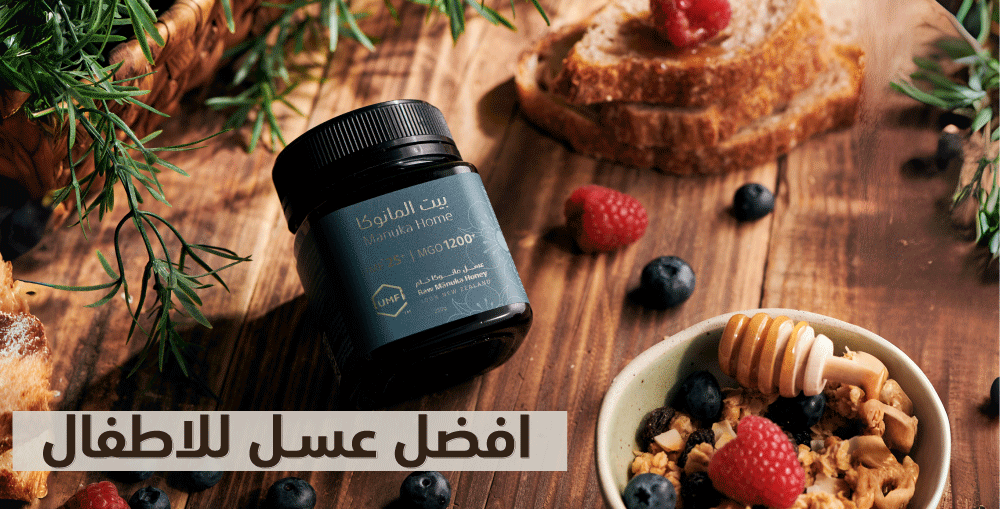
If you're looking for the best honey for children , Manuka honey is the perfect choice for your child's health and immune system. Manuka honey is considered the best type of honey for strengthening children's immunity.
It is a unique natural product extracted from the New Zealand Manuka flower, characterized by its antibacterial properties and its ability to support the immune system, soothe the throat, and improve digestion for children.
Manuka honey is not just a natural sweetener, it is a protective shield and a complete nutritional source that helps children grow healthy and strong.
What is the best honey for children?
The best types of honey for children are extracted from the nectar of various flowers, giving them unique flavors and properties that vary depending on their floral source. Some types are ideal for children thanks to their mild taste and natural composition that supports growth and immunity. Here is a selection of the best honey for children:
Manuka honey
Considered one of the rarest and most potent types of honey in the world, Manuka honey for children boasts a unique taste and high therapeutic value, making it an ideal choice for children when used in moderate amounts and under the supervision of a pediatrician.
Benefits: Manuka honey boosts immunity, soothes sore throats, supports digestive health, and can be used to sweeten warm drinks or taken by the spoonful as a natural daily dose.
wildflower honey
Featuring a fragrant blend of natural flower nectar, it is a favorite among children for its balanced flavor and gentle texture.
Benefits: Boosts energy, aids digestion, perfect for sweetening yogurt and morning oatmeal.
Acacia honey
With its pure golden color and mild flavor, it is an excellent choice for children who prefer a sweet, non-pungent taste.
Benefits: Soothes the stomach, supports the immune system, used to sweeten juices and warm milk.
Sidr honey
Sidr honey for children is a premium honey with a deep, distinctive taste, offering a rich flavor that appeals to children and those who love concentrated foods.
Benefits: One of the questions many parents have is whether Sidr honey is suitable for children. The answer is yes; it enhances concentration, supports immunity, and is great with cakes, pies, or as a sandwich filling.
clover honey
It is considered one of the best honeys for children, as it has a mild taste and smooth texture, making it popular with children and easily incorporated into daily meals.
Benefits: Natural source of energy, helps boost appetite, suitable for breakfast cereals and yogurt.
Sesame honey (honey with roasted sesame)
A rich blend that combines the benefits of honey and roasted sesame seeds, with a unique taste that is loved by children and adults alike.
Benefits: Supports bones, rich in vitamins and minerals, can be taken with a wooden honey spoon provided by the Manuka House website or mixed with tahini and baked goods.
Black seed honey for children
Extracted directly from the black seed flower without mixing, it's considered one of the best honeys for children. Rich in vitamins and minerals, it's used to strengthen immunity, relieve coughs, calm the nerves, and stimulate mental and physical development. It also helps treat respiratory and digestive tract infections and reduces gastric reflux.
Eucalyptus honey for children
It is a rare honey product known for its high nutritional value and antibacterial properties. It helps relieve coughs, soothe sore throats, and reduce mucus and phlegm. It is also used to expel stomach worms and effectively strengthen children's immunity.
Choose the best honey for children. Every spoonful of the finest, pure honey is not only delicious, but also a complete nutritional gift. Perhaps the most important of all, according to many pediatricians, is pure Manuka honey. Available on the Manuka House website in various concentrations, order it now.
Innovative ideas for feeding honey to children in daily meals
Diversifying the uses of the best honey for children provides them with an enjoyable eating experience and enhances their appetite in a natural and healthy way. Here are a few creative ideas for using honey in children's daily meals, choosing the most appropriate type for each recipe.
If you're wondering what the best honey mixture is to boost immunity, here's a unique collection of mixtures and recipes that will encourage your child to consume honey:
Yogurt with fruits and honey
Mix a teaspoon of acacia or wildflower honey with natural yogurt and add fresh fruit pieces such as bananas or berries for a rich, light, and delicious meal.
Toast with honey and fruits
Spread warm toast slices with clover honey and garnish with apple or strawberry slices for a nutritious, kid-friendly meal any time of day.
Natural sweetener for drinks
Use pure Sidr or Manuka honey to sweeten orange or lemon juice instead of sugar, giving it a smooth, rich taste with added health benefits for your immune and digestive system.
Energy-packed breakfast
Add a few drops of flower or clover honey to oatmeal or cornflakes with milk to give your child an energetic and nutritious start to the day.
Innovative fruit dip
Mix honey with a little butter to make the perfect dipping sauce to serve with apple or banana slices; it's a fun way to serve fruit.
Honey in homemade sweets
Use honey as a natural alternative to sugar when making cakes and biscuits. It is preferable to use Sidr honey or acacia honey for delicious and nutritious results.
Honey Oatmeal Cookies
Mix clover honey with butter and oatmeal to make soft and nutritious cookies; perfect for an after-school snack.
Fun honey activities for kids
Turn food preparation into a fun learning experience:
- Pancake Decorating: Let kids add honey and fruit with their hands on top of breakfast pancakes.
- Energy Balls: Mix the Manuka honey inside. Manuka House website at an exclusive and special price with oats and coconut, and encourage children to form balls themselves.
Because quality makes all the difference, Manuka House offers a variety of concentrations of pure, premium Manuka honey, known for its unique immune- and digestive-supporting properties.
What are the precautions for using honey with children?
An important note before introducing honey to children: Don't let pleasure take precedence over general safety and health. Although honey is a delicious, beneficial natural food, there are essential precautions you should be aware of before introducing the best honey for children into their diet, the most important of which are the following:
Do not give to children under one year of age.
The digestive system at this age is not fully developed, making infants more susceptible to food poisoning caused by botulinum spores, which may be found in honey, even if it appears natural and safe.
Monitoring for allergic reactions
Some children may experience allergic symptoms to honey, such as itching or a rash. If you notice any of these signs, stop using the product immediately and consult a doctor.
Moderation is the basis of safety
Honey, despite its natural properties, contains natural sugars, so it is recommended to serve it in measured quantities to avoid risks such as weight gain or tooth decay.
Choose honey from trusted sources only.
Honey quality begins at its source. To obtain pure, child-safe honey free of artificial additives, the Manuka House website offers the best honey in Saudi Arabia, Manuka House honey, a certified choice known for its antibacterial and immune-boosting properties. Order now to have it delivered to your doorstep.
What are the benefits of eating the best honey for children?
Natural honey isn't just a natural sweetener; it's a complete nutritional treasure that supports children's growth, boosts their immunity, and provides them with healthy energy with a gentle touch of nature. Here are the most important reasons why eating the best honey for children should be an essential part of their daily diet:
Promote digestive health and develop its functions
Types such as wildflower and chestnut honey are rich in natural enzymes that help improve digestion and enhance nutrient absorption, in addition to their role in supporting bacterial balance in the intestines. The result: digestive comfort, renewed energy, and a reduction in several problems such as constipation and bloating.
Strengthen immune defenses naturally
Manuka honey 1 kg contains powerful antioxidants and immune-boosting minerals, such as zinc and vitamin C. Regular consumption of honey provides the body with a natural shield against seasonal viruses and bacteria.
Soothes coughs and soothes throats
If you're looking for a safe and effective alternative to medicated drinks, Manuka honey and anise honey are the perfect choice. Thanks to their antiseptic and soothing properties, they help gently and effectively soothe coughs and reduce throat irritation, especially during cold seasons.
Baby skin care
Honey is an excellent natural moisturizer. Its skin benefits include its antibacterial and soothing properties for skin irritations. It can be used topically to help soothe redness or treat minor wounds in children.
Complete nutrition for healthy mental and physical growth
Types such as chestnut honey provide the body with vital minerals such as iron and potassium, which contribute to building bones and enhancing brain function. The result: better cognitive development, increased concentration, and a natural stimulation of physical and mental growth.
Golden Tip: To ensure maximum benefits, always choose pure, trusted honey for children. Manuka House is one of the most prominent stores in the Kingdom of Saudi Arabia that offers the finest types of original Manuka honey in various concentrations.
How much honey is allowed per day for children?
It is not recommended to give honey to children under one year of age, to avoid the risk of botulinum poisoning.
After the age of two, it can be gradually introduced into the child's diet in moderate quantities, such as by mixing it with yogurt or oatmeal. It is preferable not to exceed the total daily quantity of 6 teaspoons, distributed among meals, to ensure the benefits are fully realized without overdoing it, which could lead to problems such as tooth decay or excess calories.
What is the best time to introduce honey to babies?
After your child turns one, you can introduce honey, but with extreme caution. It's best to wait until the age of two to incorporate it regularly into your child's diet. Honey can be served in the morning with breakfast or between meals as part of a healthy snack, such as added to warm milk or fruit. Avoid serving it immediately before bedtime to prevent the sugars from affecting dental health.
What are the benefits and uses of the best honey for children?
Natural honey, especially Manuka honey +MGO 830 , is one of the finest ingredients that adds a luxurious and rich touch to dessert and baked recipes, thanks to its thick texture and balanced taste that adds depth and unique flavor.
It is used as a healthy and natural alternative to sugar to sweeten fresh juices and hot drinks such as tea and coffee, making it an ideal choice for adults and children alike.
It can be easily incorporated into recipes for stuffed pie or cakes of all kinds, and is also used in preparing homemade sauces and jams. It is also an essential ingredient in preparing natural chocolate balls when mixed with coconut instead of artificial sweeteners.
In addition to its high nutritional value, honey contributes to supporting the healthy growth of children when used wisely in daily meals, providing them with natural energy and a pleasant flavor without harming their health.
How does honey help strengthen children's immune systems?
Natural honey, especially Manuka honey, is one of the most powerful immune-supporting ingredients, thanks to its rich composition of vital elements that directly contribute to strengthening the body's natural defenses.
Honey contains a potent blend of essential minerals such as iron, calcium, and magnesium, along with a host of vitamins and vital enzymes that boost the immune system and support it in fighting off infections.
Honey is also known for its high concentration of antioxidants that fight free radicals and reduce inflammation, as well as its natural antibacterial and antiviral properties, making it an effective weapon against colds and recurring infections, especially when consumed with warm lemon.
How to give honey to children to strengthen immunity?
To get the most out of honey in supporting children's immunity, it is recommended to consume it daily in multiple ways; such as dissolving a spoonful of UMF 15+ Manuka honey in a cup of warm water in the morning on an empty stomach to cleanse the digestive system and enhance nutrient absorption.
It can also be combined with herbal drinks such as anise, ginger, or chamomile to create a combination that is both tonic and soothing.
It can also be mixed with cinnamon or black seed to significantly boost immunity. Eating honey with foods or as a sugar substitute is a healthy daily choice that enriches the body with biologically active ingredients that boost immunity and support vitality.
My experience with Manuka honey for children
As a mother, I've always been looking for natural and safe solutions to boost my child's immunity, especially with the recurrence of colds and coughs throughout the year. After much research, I decided to try Manuka honey , the best honey for children, and I started giving my child a teaspoon daily mixed with warm water in the morning on an empty stomach.
It wasn't until weeks later that I noticed a clear difference: His coughing fits were noticeably reduced, his sleep was more restful, and his skin was gradually improving from some minor irritations he had been experiencing.
The biggest surprise was his energy and vitality. He seemed more lively and outgoing. I felt reassured that I had chosen a natural and effective product, rich in antibacterial and nutrients. This is why Manuka honey has become an essential part of my child's daily health routine.
Frequently Asked Questions
What happens if you eat honey daily?
Eating honey daily effectively increases levels of adiponectin, a hormone that helps reduce inflammation in the body, in addition to regulating blood sugar levels during long periods of fasting.
What is the best type of honey to strengthen children's immunity?
Manuka honey is the best honey for children to use to naturally boost their immunity, thanks to its methylglyoxal (MGO) content, which has powerful antibacterial properties.
This unique compound helps activate immune cells and improve the body's response to viruses, making it a smart choice for preventing seasonal diseases and strengthening the body's internal defenses.
What type of honey is best for babies?
For children, genuine New Zealand Manuka honey is safe and effective, especially when used in moderate amounts. It is pure and free of artificial additives, and rich in minerals and vitamins that support healthy growth and improve digestive efficiency.
It is also gentle on the stomach and does not cause irritation, making it an ideal choice to introduce into a child's diet after the age of two.
What type of honey is the healthiest?
When it comes to the healthiest honey, Manuka honey stands out with its exceptional combination of rare nutrients and powerful medicinal properties.
It is known for its powerful anti-inflammatory properties, supporting respiratory and digestive health, and its role in cell repair and combating oxidative stress. Therefore, it is one of the most recommended types of honey by nutritionists and naturopaths.
What is the best honey for the immune system?
Manuka honey is unmatched when it comes to supporting the immune system. It enhances the body's defenses by boosting the production of white blood cells and fighting off harmful bacteria and disease-causing viruses. Regular use creates a natural immune shield that protects children and adults from recurrent infections and speeds up recovery from illness.
Is Manuka honey safe for young children?
Manuka honey is safe for children over one year old, as it has antibacterial properties and is soothing to the digestive and respiratory systems. However, it is not recommended for children under one year old due to the possibility of botulism.
Just like any other natural honey, after this age, it can be used in moderate amounts to help boost immunity, soothe coughs, and improve digestion.
Does Manuka honey boost immunity?
Yes, scientific studies have proven that Manuka honey effectively contributes to enhancing the function of the immune system, thanks to its content of MGO (methylglyoxal), which gives honey antibacterial and antiviral properties.
It also contains powerful antioxidants that boost the body's ability to fight infections and reduce oxidative stress, making it a supportive choice for immune health in adults and children alike.
When should I start giving my baby honey?
Doctors advise against giving your baby any type of honey, including Manuka honey, before their first birthday. After this age, you can gradually introduce very small amounts of honey into their diet, preferably after their second birthday to ensure their digestive system has matured.
It can be added to yogurt, oatmeal, or natural juices as a healthy alternative to sugar, provided it is used in moderation and not in excess.
What is the best honey in Saudi Arabia?
Saudi Arabia is famous for its abundance of luxurious, authentic honey varieties, such as Sidr honey and Talh honey, which are highly sought after for their medicinal benefits and rich taste.
However, genuine New Zealand Manuka honey is one of the most distinguished imported options in the Saudi market, thanks to its globally certified quality and unique therapeutic properties, especially for those seeking immune support and improved overall health.
Is pure honey good for children?
Certainly, pure, natural honey is rich in vitamins, minerals, and enzymes that support a child's growth and health. It improves digestion, soothes sore throats, strengthens the immune system, and provides the body with energy.
It is important to ensure that the honey used is unpasteurized and free of artificial additives to ensure maximum health benefits from the best honey for children.
Finally, choosing the best honey for children is a crucial step in improving your child's health and strengthening their immune system. Because the Manuka House website in the Kingdom of Saudi Arabia cares about the next generation, it offers your child authentic Manuka honey in various concentrations and packaging, along with a selection of the best packages and a wooden honey spoon. Order what you love now from the Manuka House website.